


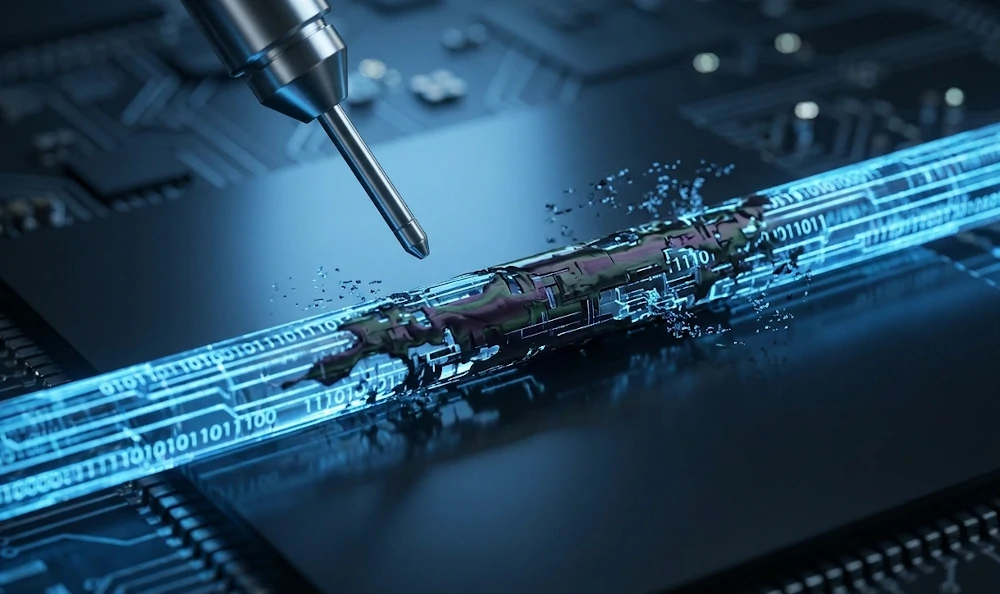
The “Blue Screen of Death” is a thing of the past. Today’s malware doesn’t want to break your computer—it wants to live in it forever.
If you remember the early days of the internet, a virus was something that made your screen flicker or deleted your files. It was loud, annoying, and usually obvious. But as we move through 2026, the “Malware Market” has become a billion-dollar industry that prizes silence over chaos. The most dangerous threats today are the ones you never see, working quietly in the background of your website or your smartphone to siphon off your data, your passwords, and your identity.
At The Zuk, we see this daily. Cybercriminals have moved away from “vandalism” and toward “extraction.” They aren’t trying to pull a prank; they are running a business. By understanding how these modern threats operate, you can build a defense that doesn’t just react to problems, but prevents them from ever taking root in your digital life.
The Zuk’s Take: In 2026, the goal of malware is “Persistence.” If you don’t know it’s there, the criminal keeps making money. Your best defense is a clean signal and a zero-trust mindset.
The Rise of “Stealer-as-a-Service”
One of the most concerning trends this year is the explosion of “Infostealers.” In the past, a hacker had to be skilled to build a virus. Now, they can simply subscribe to a service. For a small monthly fee, criminals can rent powerful software designed to do one thing: find the “Login Session” files in your browser.
This is why “saving your passwords in your browser” has become a major risk. These stealers bypass your Two-Factor Authentication (2FA) by copying the “cookie” that tells a website you are already logged in. They don’t need your password if they can convince the site they are already *you*. This is a professional-grade threat that is hitting small business owners and entrepreneurs hard because it happens in the blink of an eye.
AI-Powered “Chameleon” Malware
We’ve all heard about AI making our jobs easier, but it’s also making the “bad guys” faster. In 2026, we are seeing the mainstreaming of **Polymorphic Malware**. In plain English, this is code that changes its own “shape” every time it spreads.
Traditional antivirus software works like a digital wanted poster—it looks for a specific face (or code signature). But AI-driven malware can change its face every hour. This makes it incredibly difficult for standard security tools to catch. It can hide inside a WordPress plugin or a legitimate-looking PDF, staying dormant until it’s ready to activate. This is why “Site Recovery” and “Malware Removal” have become essential services for anyone running a domain portfolio; you can’t just set it and forget it anymore.
The “Zombie” Website Threat
If you own multiple domains, you are a prime target for “Zombie” malware. This is where a hacker gains access to your site’s backend—often through an outdated theme or a weak password—and uses your server’s power to send spam or mine crypto.
The scary part? Your site might look perfectly fine to you. But in the background, your server is working overtime for someone else. This can get your domain “blacklisted” by Google, meaning your search rankings will tank and your emails will go straight to spam. Protecting your digital assets in 2026 requires more than just a firewall; it requires regular “Health Checks” to ensure no one has moved into your digital house while you weren’t looking.
The Bottom Line
Malware has evolved from a hobby for teenagers into a professionalized workforce. The threats in 2026 are silent, persistent, and highly targeted. However, you aren’t helpless. By using dedicated password managers (not just your browser), keeping your software updated, and monitoring your site’s performance, you can keep your digital signal clean and your assets safe.
Stay vigilant. Lock the doors. Unleash yourself.